
Annual cereal crops such as wheat, barley and rye have been cultivated for thousands of years for food and animal feed. They must be sown each growing season, often involving soil tillage, which can increase the risk of soil erosion and associated nutrient losses. To help reduce these impacts, researchers have worked for several decades to develop perennial grain crops through plant breeding and the domestication of wild species. Once established, these crops can produce grain for several consecutive years without needing to be resown.
One example is intermediate wheatgrass (Thinopyrum intermedium), which produces the perennial grain marketed as Kernza. Research at Lönnstorp Research Station since 2014 has provided valuable insights into its cultivation and management under Nordic conditions.
Building on this experience, a new pilot project at Lönnstorp aims to explore the potential of a wider range of perennial grain crops under Nordic conditions. The project includes several breeding lines of perennial wheat from The Land Institute and Washington State University, as well as one breeding line of perennial rye. Their performance will be compared with that of a new variety of Kernza.
The project is led by Valentin Picasso, Professor at the Department of Crop Production Ecology at SLU. He brings extensive experience in perennial grain research, including work at the University of Wisconsin–Madison in the United States.
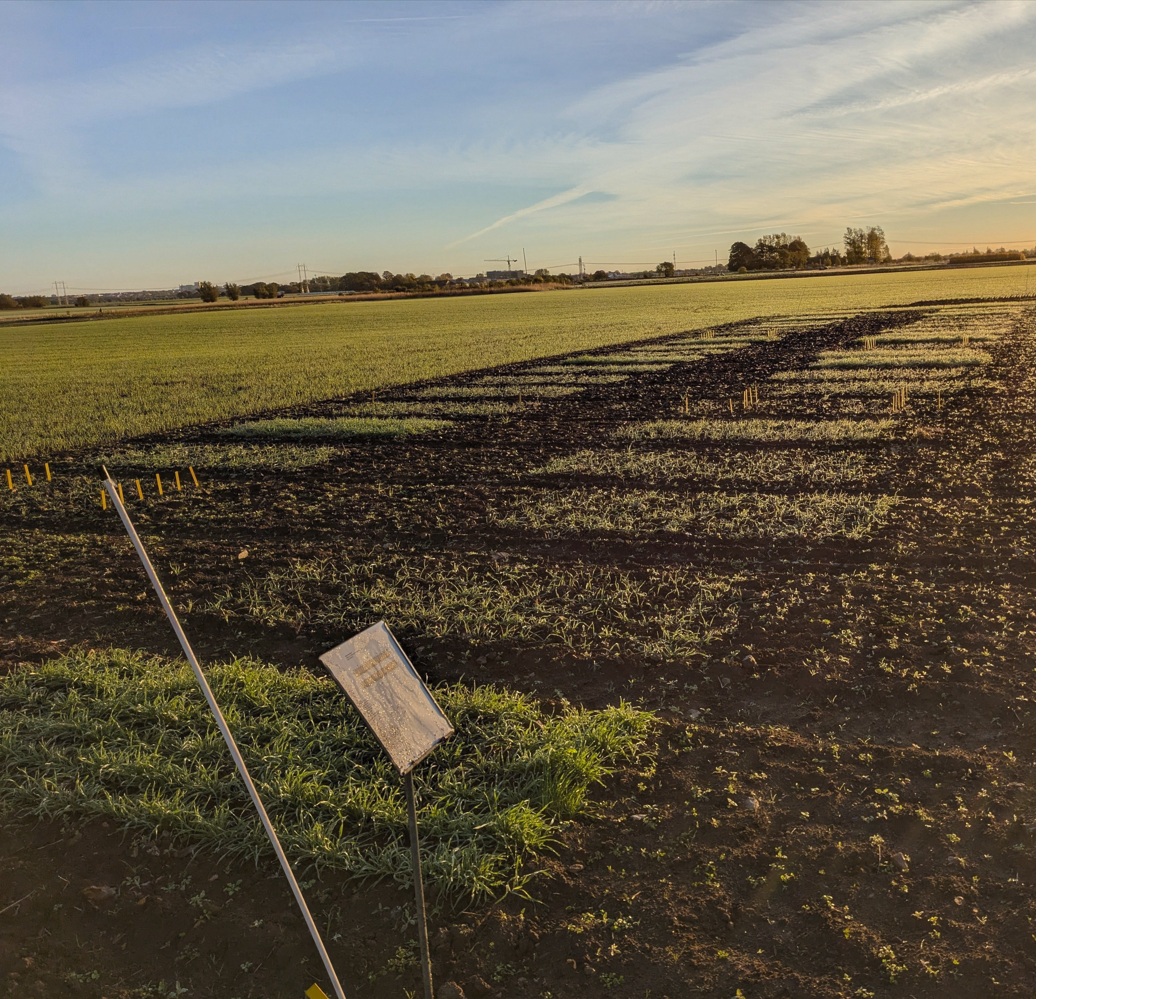
The newly established perennial grain pilot project at Lönnstorp Research Station (Photo: Johannes Albertsson)