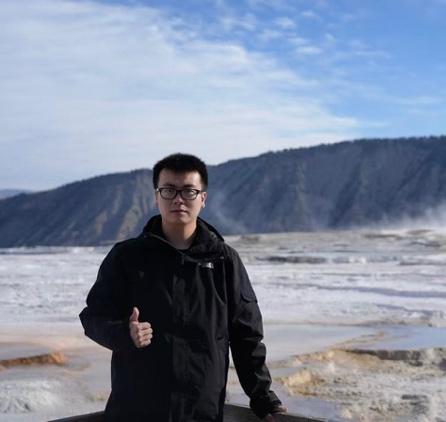
Shuai Yang is one of the authors of “Unraveling the depth-dependent causal dynamics of methanogenesis and methanotrophy in a high-latitude fen peatland”, published in Environmental Research Letters in 2025. The study was conducted at the Stordale Mire, part of Abisko Scientific Research Station. Here, Shuai Yang shares insights with the SITES Community about the project and experience sampling at a SITES station.
What is the motivation behind studying methanogenesis and metanotrophy in high latitude fen soils?
Methane is the second most important greenhouse gas and contributes to ~20% of global warming. However, the mechanisms of methanogenesis and metanotrophy are still poorly understood due to spatiotemporal heterogeneity of microbial activities and biogeochemical processes. We combined a modeling study with site observations to better understand the methane cycling.
What are the main findings of your project?
We found that temperature, microbial biomass, and methanogenesis and methanotrophy substrates exhibit significant vertical variations within 0-30cm in the soil column.
How can the results be applied in society and be utilized by different stakeholders?
The results help us better understand methane cycling and guide us to conduct better work in other ecosystems. The modeling and causal inference analysis can also be applied in different ecosystems.
Has a collaboration with other researchers, research groups, stakeholders and companies taken place?
We have collaborated with different groups and researchers to conduct the project, including Lawrence Berkeley National lab, Lawrence Livermore National Lab, Ohio State University, Florida State University, University of Alberta, University of Arizona, and University of New Hampshire.
What has been done at SITES Abisko Scientific Research Station?
The work at Abisko focused on field sampling and systematic observations at Stordalen Mire, which provided the empirical part for the entire study. We then used the observed data to validate the model we adopted.
What worked best and what were the challenges with the work you carried out in Abisko?
We appreciate the extensive previous observations collected at the Stordalen Mire.