
The SITES Water Program - a coordinated catchment monitoring program in lakes and streams – has been in operation for nearly 10 years and was built on efforts of existing water sampling programs at Svartberget (Krycklan Catchment Study), Skogaryd (Catchment monitoring) and Erken (Historical lake monitoring). SITES Water Data, from both the coordinated efforts over the past decade as well as from historical water sampling programs at the above-mentioned stations, is open for researchers to use.
Here we present two recent publications that provide good examples of how SITES Water data can be utilized in broad context.
Roosloot et al. 2026. Comparison of humidity-induced stress levels between floating and ground-mounted photovoltaics, Solar Energy.
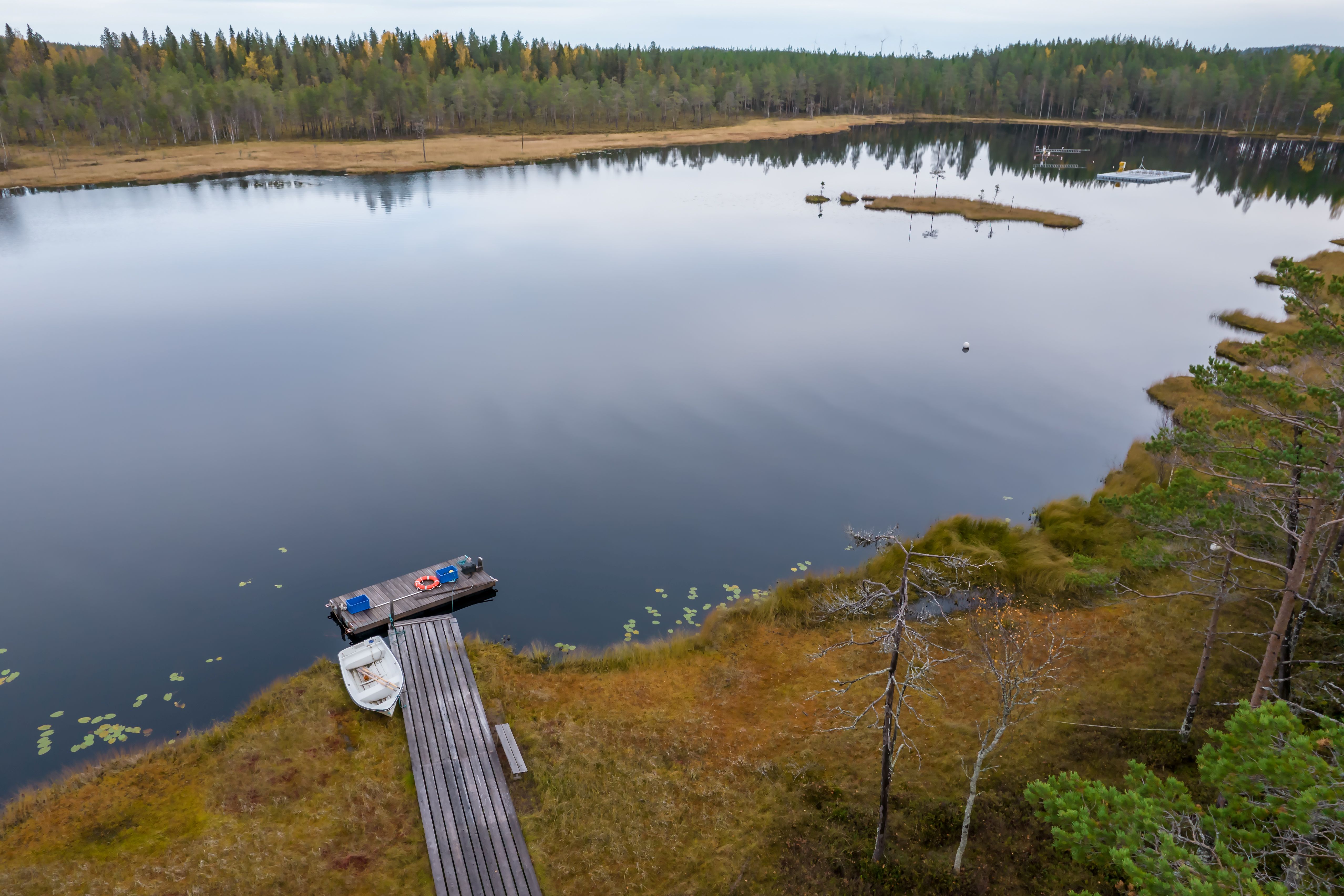
In this paper, humidity stress levels over in-land water bodies and nearby locations on land were modelled to test whether floating photovoltaic (FPV) systems really encounter higher stress levels than their counterparts on land, as is commonly assumed. The research was a multidisciplinary collaboration through the Global Lake Ecological Observatory Network (GLEON) where environmental timeseries on in-land water bodies and nearby locations on land spread across the globe where used. Data from four of the seven locations in this study were from the SITES Water Program – Stortjärn (Svartberget), Erssjön (Skogaryd), Lake Erken (Erken) and Almbergasjön (Abisko) – and supplemented with data from ICOS Sweden and SMHI. A critical part of the modelling was the use of measurements rather than satellite products, as measurements allowed for local differences between water and land to be resolved.
“The most surprising result of this research is that humidity-induced stress levels are not necessarily worse over water than over land,” Roosloot said. “Instead, the climate zone of deployment, as well as several factors in floating PV system design, including module height above the water and the degree of module cooling, often have a larger effect on humidity-induced stress levels than whether a PV module is deployed over water or land.”📰 Read the PV magazine news story
Laudon et al. 2026. Variable scale domains reconcile continuous and patchy carbon dynamics in river networks, Nature Water.
In this paper, 40 years of Krycklan research and data is synthesised into the Variable Scale Domains (VSD) framework; a new theory explaining how carbon is supplied, transformed and transported through freshwater systems. The framework, which explains how organic and inorganic carbon is transformed as it is transported through the stream network, is based on many decades of data that monitored the water flowing from forests and mires to the smallest streams, lakes and rapids toward the Vindel River. Such a framework can only be realized with many years of research and data collected within the Krycklan Catchment Study and SITES Water program.
“We show that both the general scale and the local environmental features are about equally as important but are regulated in different ways depending on the water flow, and the types of carbon compounds you are interested in, says Hjalmar Laudon, Professor of Forest landscape Biogeochemistry at the SLU.” 📰 Read the SLU news story
Explore SITES Water Data and be sure to acknowledge SITES if this data is used in future publications.
Photo: A view above Stortjärn (Svartberget) where SITES Water lake and outlet stream monitoring takes place. Meteorological data is measured on the lake platform as well as on land nearby (Koko Konstantinov).