
Although SITES lake sampling is now in full swing for the summer season, it is a good moment to highlight that winter fieldwork is just as essential to understanding lake ecosystems. The ThinIce project’s ice sampling campaigns, carried out earlier this year, are a key part of that year-round picture.
Lakes play a crucial role in the global carbon cycle, acting as dynamic sites for carbon transformation and greenhouse gas (GHG) emissions. While past research has highlighted their significance, uncertainties remain, particularly regarding the influence of lake ice cover on GHG budgets. This knowledge gap is critical, as most lakes globally experience seasonal ice cover, which is rapidly declining. The transition from ice-covered to open-water conditions alters physical, chemical and biological dynamics, impacting carbon transformation efficiency and, ultimately, the global carbon cycle. By studying lake ice microstructure and its effects on biogeochemical and ecological lake processes, the aim is to increase the understanding on the changing role of lake ice in global carbon dynamics. Main project members in Sweden are Gesa Weyhenmeyer (project leader Uppsala University), Sara Camén (PhD student Uppsala University), Mark Peternell (Lecturer and IceLab coordinator at Gothenburg University). ThinIce is a project carried out within the Global Lake Ecological Observatory Network.
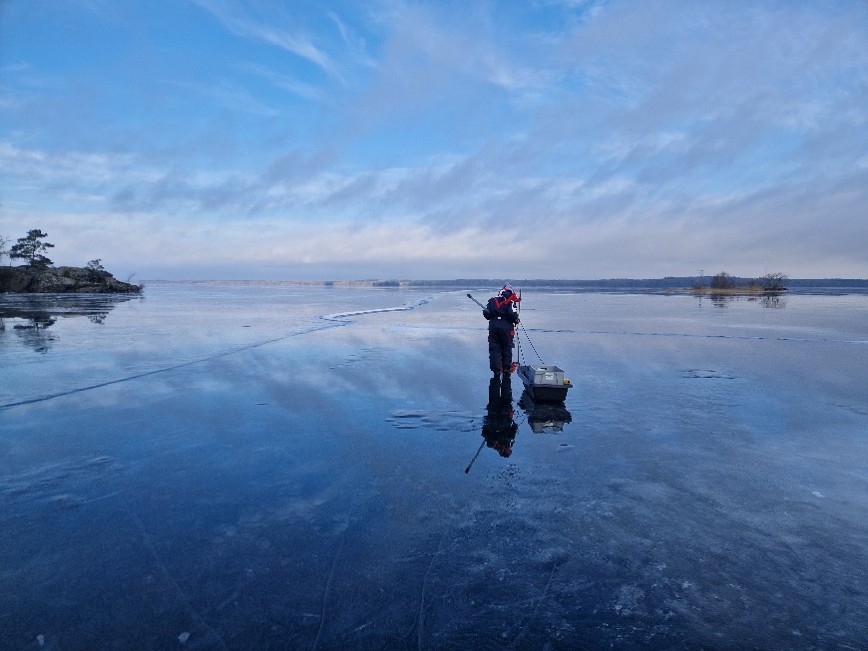
Sampling at the lake Erken in March 2026 (photo: Gesa Weyhenmeyer)
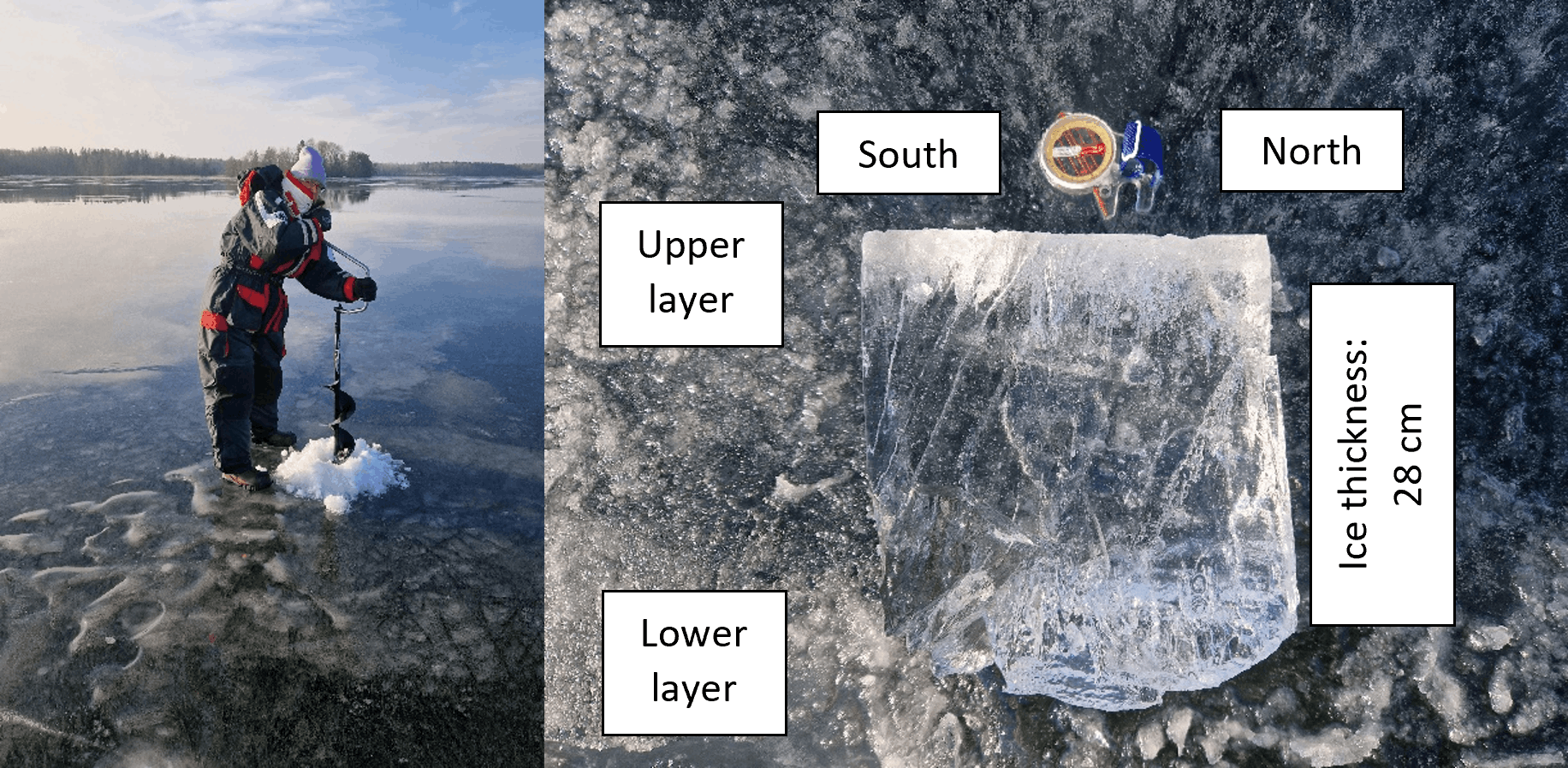
Ice sampling in the pelagic zone of Lake Erken (March 3, 2026, photos: Gesa Weyhenmeyer)
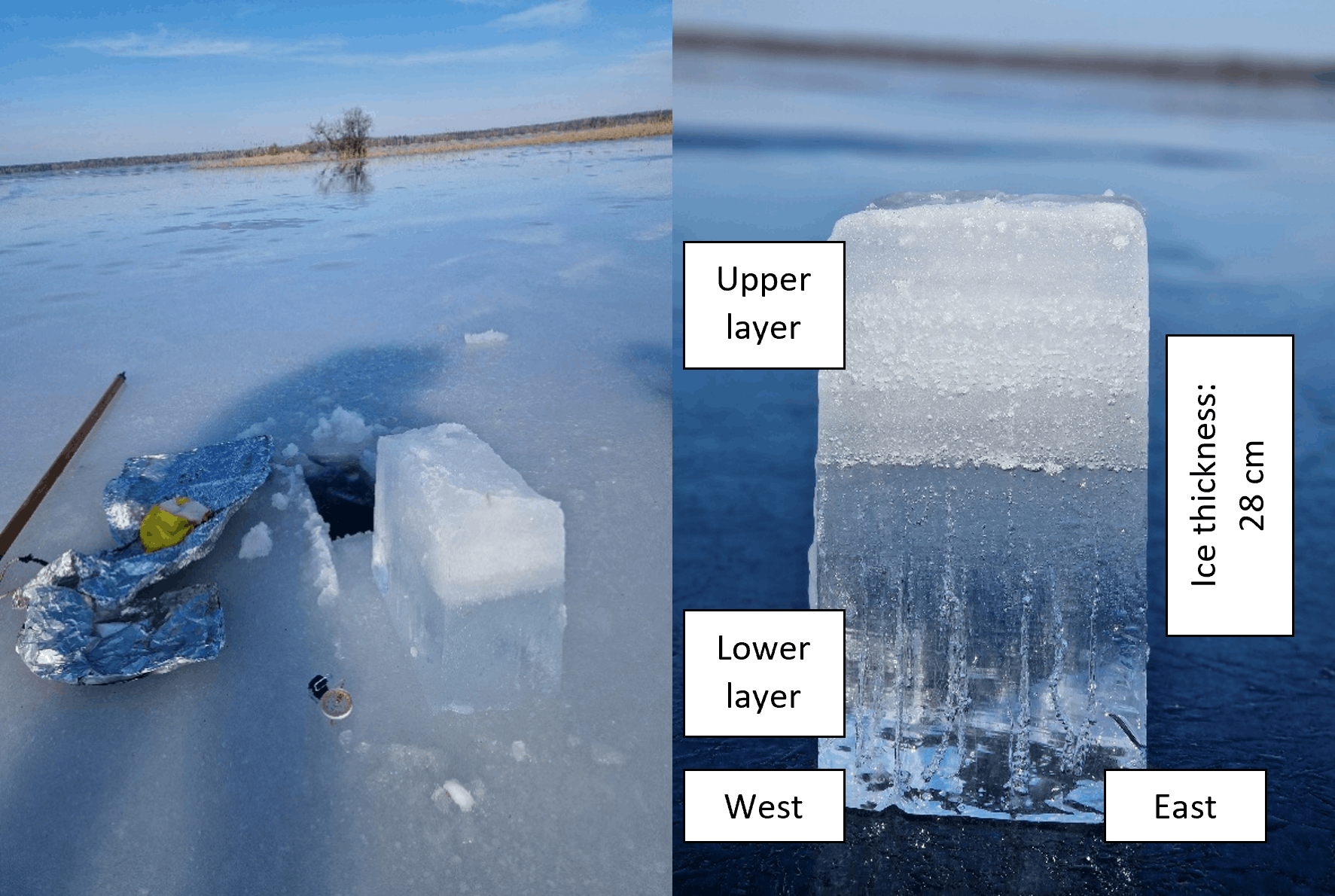
White ice on top of clear ice in the shallower parts of the lake. This part of the lake froze before the snowfall came in contrast to the deeper parts of the lake which froze first after the snowfall (Photos: Gesa Weyhenmeyer)