
Are you interested in participating in a coordinated mesocosm experiment that investigates effects of terrestrial inputs of mineral particles on carbon and nutrient transformations, food web dynamics and metabolism across lakes?
The Swedish Infrastructure for Ecosystem Science (SITES) will run such an experiment June 15th-July 3rd 2026. We invite researchers and students to invoke in the planning, implementation and analysis of the experiment and to join us in this exiting mission of running a coordinated experiment across lakes!
How can I get involved?
You can join as a researcher or BSc/MSc/PhD student with your specific research project that addresses a question that fits within the overarching topic of the experiment. In addition, applications for interns without a specific project that would like to be part of the experiment and help with the practical implementation of the experiment are also very welcome to join.
Information meeting: SITES will organize an information meeting where you can ask questions and give input on February 13, 2026 at 10:00 via Zoom: https://uu-se.zoom.us/j/67861977288.
For more information and question you can also contact the SITES AquaNet Lead, Silke Langenheder, silke.langenheder@ebc.uu.se
To apply please fill in the brief application form by 31 March 2026:
- Apply with own project
- Apply for an internship
EXPERIMENT OVERVIEW
Time period: June 15- July 3rd, 2026
(depending on interest and availability there might also be the possibility to run the experiment during an alternative time later in 2026)
What is the experiment about?
As a result of ongoing climate change, inland waters will experience heavier and flashier rainfalls, storm-induced mixing and prolonged drought periods in the summer. This will result in higher and more variable inputs of soil-derived dissolved and particulate matter from the surrounding catchment into lakes. Such runoff can transport different types and amounts of mineral particles into a recipient lake ecosystem.
Depending on the properties of the mineral particles, including the amount of pre-existing soil organic matter, and the concentration of dissolved organic carbon (DOC), the mineral particles can adsorb dissolved organic matter (DOM) and thereby protect it from bacterial degradation and reduce the bioavailability of DOM for heterotrophic respiration. Alternatively, the particles can provide a surface for biofilm growth and promote metabolic processes such as respiration. Particles transported into lakes from surrounding agricultural soils typically contain bioavailable nutrients including carbon, nitrogen and phosphorus, as well as mineral surfaces for bacteria to adhere to, which can promote biofilm growth and enhance respiration. In addition, the addition of finer clay particles remaining in suspension can potentially increase turbidity, reduce light availability, and influence primary production. Ultimately, the balance between the formation of mineral – organic matter complexes and biofilm development has the potential to influence Net Ecosystem Production (NEP), which is the balance between Gross Primary Production and Respiration. How such dynamic interactions are modified depending on different rates of mineral inputs and ambient conditions of the lakes is poorly understood, particularly under natural conditions at the lake/catchment scale.
To address such questions, spatially coordinated experiments that study responses to the same manipulations with standardized equipment and methods are crucial tools. SITES AquaNet is well suited here because it is designed to implement standardized experiments across 5 SITES lakes, which differ with regard to DOC concentration and trophic status. Moreover, the mesocosms are equipped with a high frequency sensor system for high-resolution measurements of phytoplankton and cyanobacterial biomass and ecosystem metabolism, such as primary production and respiration, at various time scales.
Experimental set-up
The overall set-up will be similar to previous SITES AquaNet experiments where we manipulated different intensities and frequencies of cDOM and nutrient pulses at a constant total load. This means that the same total amount of minerals in the form of a typical agricultural loamy soil will be added at different levels of additions, representing a gradient of gradual to abrupt, and a control without additions.
What does SITES offer?
SITES can offer free access to the mesocosm experiment, technical support for setting up the experiments and sensor and project specific instrumentation, and lab space for processing samples (see here for more information). SITES will also provide sensor data and background water chemistry variables for selected time points during the experiment. Costs for travel, accommodation and other living costs during the stay need to be covered by the applicant. Some stations (Bolmen, Erken, Skogaryd and Svartberget) can offer free accommodation for interns and BSc and MSc students that carry out their thesis projects connected to the experiment.
How are the applications evaluated?
Should we receive more applications then we can accommodate, applications will be accepted based on practical feasibility, fit to the overarching objective of the experiment, and priority given to projects using more than one site. For interns, we will base the selection on the motivation letter and prioritize applicants that can stay for the entire project period.
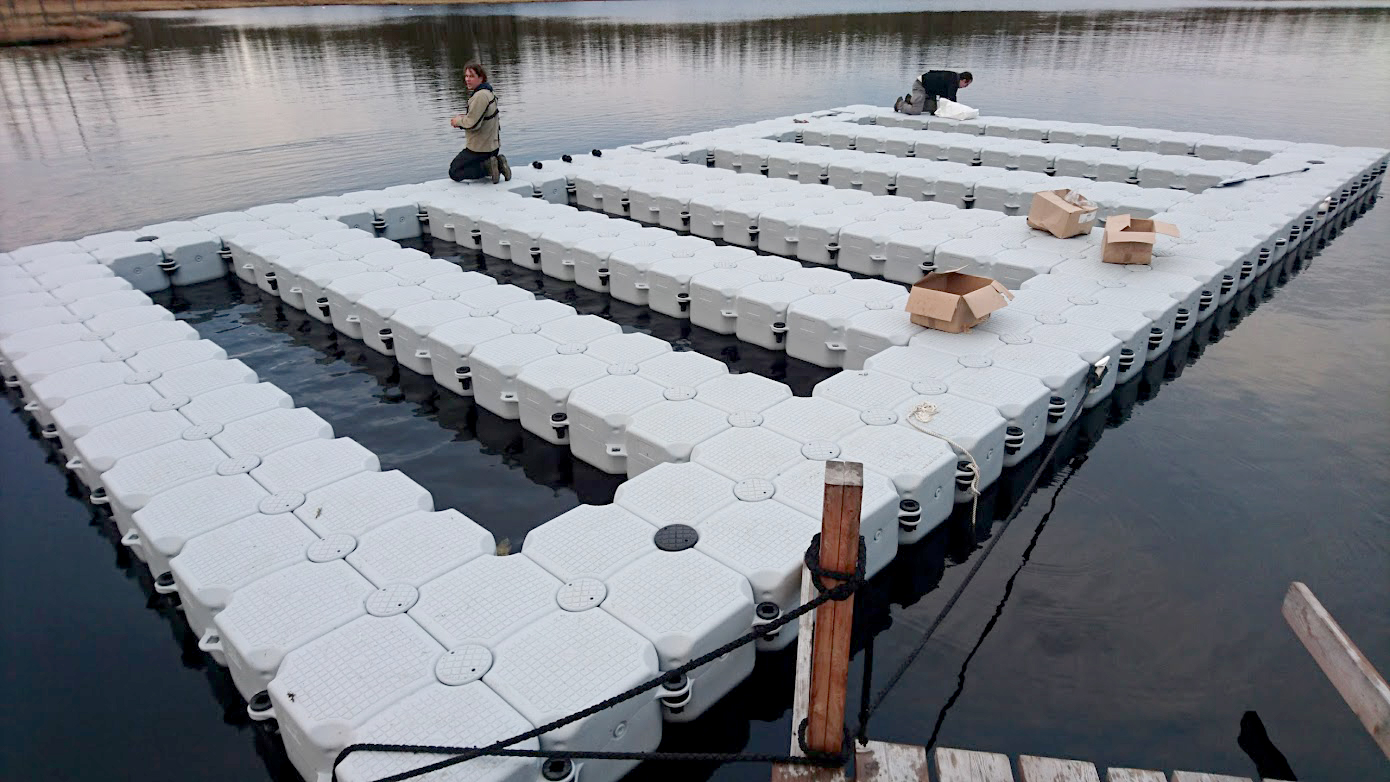
The SITES AquaNet platform at Svartberget (photo: Johannes Tiwari)